
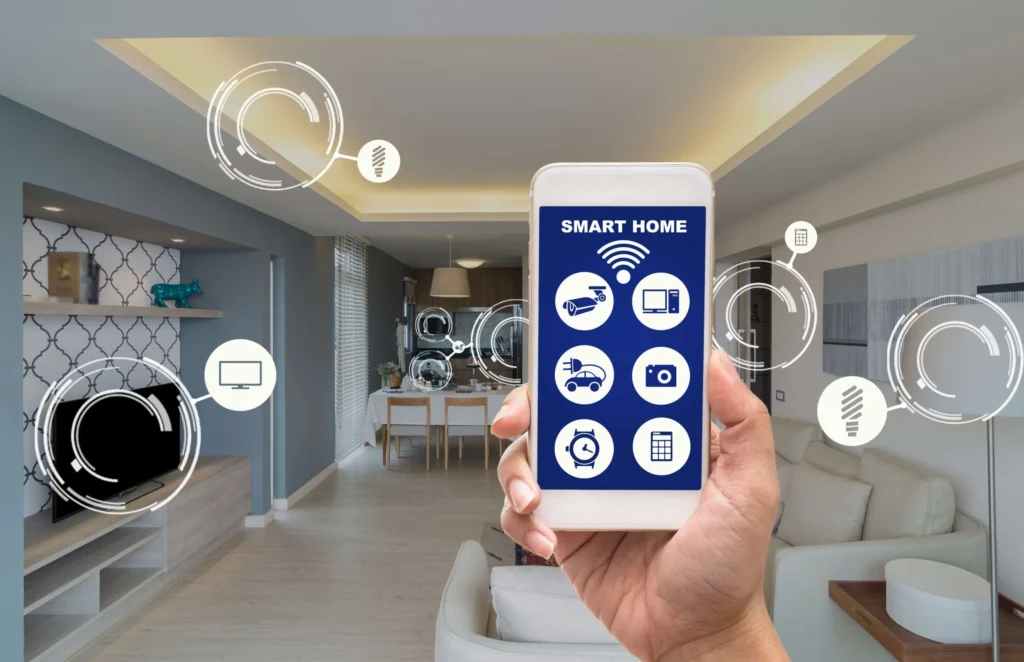
One of the most common uses for smart home sensors is to turn the lights in your home on and off. Smart bulbs are pretty cheap and easy to install, and when you pair them with smart switches, you can make it easy to manage your lighting. So, these sensors can make your smart home even better.
Smart Home Sensor Price Guide: Building a Reliable Security Network
One of the easiest home automations to set up is the combination of a motion sensor and a smart bulb. You install the bulb to be triggered by motion detection. When you walk into the room with the motion sensor, the light will switch on automatically.
The problems come when you want the light to turn off again. You can easily set up another home automation Egypt turn the light off when there is no more motion. When you leave the room, the light should go out.
Here you will discover the problem is that a motion sensor can only tell you when there is something moving in a room. If you stay still, the motion sensor stops detecting motion, the Home Automation Egypt runs, and the lights turn off, leaving you sitting in the dark in the room.
A typical DIY home smart security system will generally cost between EGP 15,000 and EGP 45,000 to install with a reasonable degree of reliability. The cost can be scaled down to a localized mesh network of entry and motion sensors room by room, where homeowners in Egypt can layer coverage starting from EGP 3,500 to EGP 8,500.
The Best Temperature & Humidity Sensors for HVAC Automation
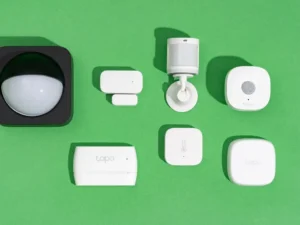
As a Life Home tip you when choosing brands of temperature and humidity sensors for HVAC smart automation Egypt, you will want to consider accuracy, long-term stability, and compatibility. The best smart home sensor will not make the system oscillate (waste energy) but will give good metrics of the climate for your particular building environment.
Top Temperature & Humidity Sensor Brands for HVAC Automation:
Fundamental Evaluation Criteria
- Accuracy vs. Repeatability: Standard automation is ± 0.5ºC for temperature and ± 2% RH to ± 5% RH for humidity. The brand guarantees repeatability (the ability to go back to the same readings) so you don’t have to constantly recalibrate.
- Placement & Environment: Choose the sensor that fits the application (e.g., Duct Mount Sensors for airflow tracking, immersion sensors for pipes).
- Connectivity & Protocols: Easily connect to your BMS (Building Management System) or smart hub using protocols such as Modbus, BACnet, I²C, or wireless protocols such as Zigbee/Z-Wave.
- Long-Term Stability: Quality sensors are made from advanced CMOS or MEMS components that are resistant to environmental drift (aging).
Bestselling Smart Home Sensor Brands by Category
Commercial & Industrial Building Management System (BMS)
- Siemens: Room and duct sensors with high accuracy and standard industry protocols, known for fail-safe building control.
- Schneider Electric: Great modular sensors and transmitters that integrate deeply with large-scale commercial energy management systems.
- E+E Elektronik: Specializing in demanding high-end HVAC and industrial applications, providing heated probes for continuous high humidity or condensing environments.
- Smart Home Sensor & Light Commercial Aqara: Deeply integrated in home automation ecosystems (like Home Assistant), offering reliable wireless temperature and humidity monitoring with low latency.
- Heiman: Provides powerful Matter-over-Thread sensors for cross-platform smart home capabilities without vendor lock-in.
Affordable Security Hardware: Buy Reed Sensor, Gas Sensor, and Photo Eye Sensor
You can get Smart Home Egypt like Reed, gas, and photo eye sensors locally in Alexandria, Egypt, or order them online for direct delivery. Basic components: $0.35-$20.00 USD (10-600 EGP). Prices for heavy-duty industrial or wireless setups: up to $65+ USD (2,000+ EGP)
- Reed switches (magnetic contacts): Great for door/window alarms and access control systems.
- Gas Sensors (Series MQ): These are used for the detection of smoke, LPG, and combustible gases.
- Photo Eye Detectors (Photoelectric): These smart home sensors emit a beam of light to detect an obstacle or motion and are often used in automatic gates, packaging machines, and security fences.
Industrial Grade Hardware: Fuel Level Sensor, TDS Sensor, and Load Sensor Costs

The costs of this smart home sensor vary widely depending on the technology and the application. You can get DIY electronics or basic water quality testing for as little as EGP 150. In developed industrial environments or automotive applications, they can be from EGP 1,500 to more than EGP 30,000.
SENSOR OF FUEL LEVEL
Smart Home New Cairo sensors are used to sense the level of fluid in a tank and are most commonly used in vehicles, generators, and industrial fuel storage.
Basic Automotive / Float Sensors: EGP 250 to EGP 1,500.
Industrial Capacitive/Ultrasonic Sensors (Fleet/Tank Tracking): EGP 4,000 to EGP 15,000 (Approx. €150 – €400))
Prices for such sensors vary widely with technology and application.
TDS Sensors
Smart Home Fifth Settlement for DIY electronics or simple water quality tests:
- TDS (Total Dissolved Solids) sensors measure the concentration of dissolved substances in water (e.g., in hydroponics, RO water filters, aquariums).
- Hobbyist/Arduino Analog Modules EGP 150 to EGP 600 depending on whether a waterproof probe or driver board is included
- Portable Tester Devices EGP 250 – EGP 3,700.
Load Cells, or Load Sensors:
They serve as force transducers, converting weight or pressure into an electrical signal. utilized in industrial force measurements and computerized scales.
DIY/Low-Capacity (1 kg to 50 kg): EGP 75 to EGP 350 (mostly basic straight-bar cells).
Industrial/High-Capacity Load Cells: EGP 3,000 to EGP 30,000 based on accuracy (e.g., IP65 rating), material, and weight limit.
S Life Home can give you a more specific price range and suggest local suppliers in Egypt if you can let me know what particular project or application you need these sensors for.
Frequently Asked Questions (FAQ) About Ordering Smart Home Sensors
Which four types of sensors are there?
Based on the physical characteristics they detect, sensors may be roughly divided into four categories: temperature, pressure, proximity, and light sensors.
Which smart home sensors and gadgets are now the most widely used?
Voice assistants that easily integrate with video doorbells, smart lighting, and environmental sensors are the foundation of leading ecosystems like Apple HomeKit, Google Home, and Amazon Alexa Integration.
What is the purpose of smart sensors?
Automation, remote monitoring, predictive maintenance, and data-driven decision-making are their key uses in a variety of sectors.